
 ultimate-guide
Buy Bulk Flooring Materials in South Texas: 2026 Guide
Table of Contents
- Why Buying Bulk Flooring Materials in South Texas Makes Sense
- Choosing the Right Materials for Bulk Flooring Projects
- How to Estimate Flooring Waste for Large Projects
- The Cost of Professional Flooring Installation in 2026
- Texas Climate Considerations for Bulk Flooring Purchases
- Logistics and Freight Shipping for Bulk Flooring Materials
- What to Look for in a Wholesale Flooring Supplier
- Frequently Asked Questions
Last Updated: October 4, 2026
Why Buying Bulk Flooring Materials in South Texas Makes Sense
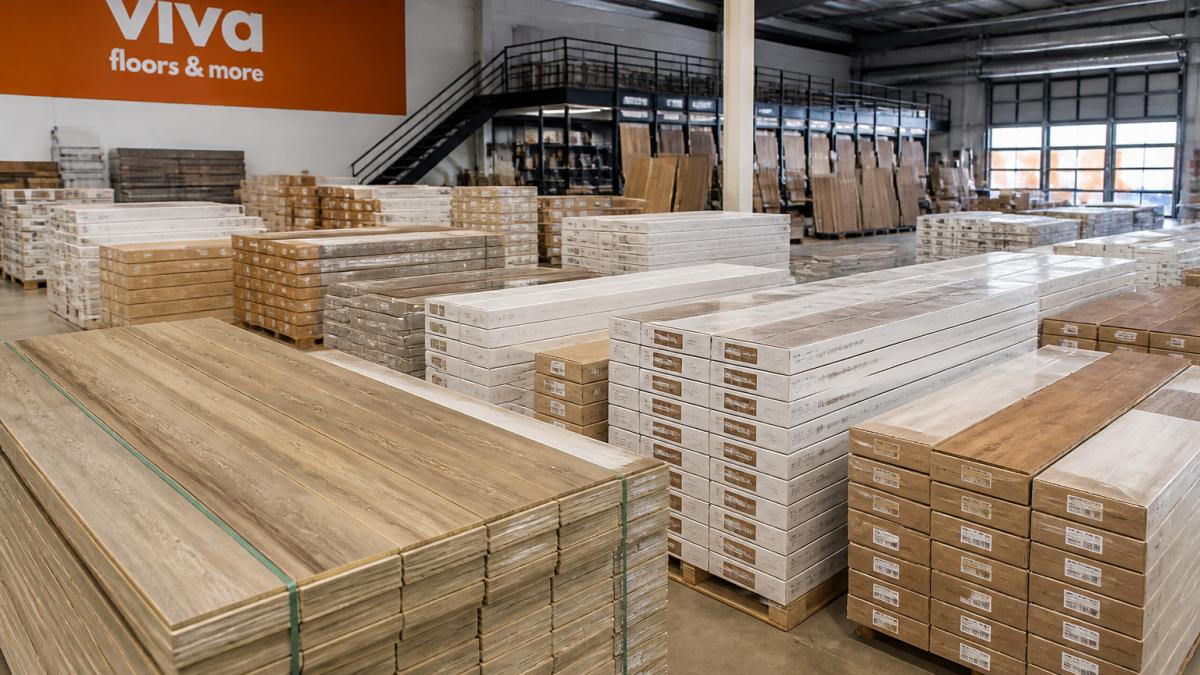
Buying bulk flooring materials in South Texas is the practice of purchasing hardwood, laminate, vinyl, tile, or stone in large quantities directly from a wholesale supplier to cover a full renovation, new build, or commercial project. At Viva Floors & More, we've watched Rio Grande Valley homeowners and contractors save real money by consolidating orders instead of buying box by box at retail.
The math is simple. One room's worth of flooring rarely justifies a bulk order. Five rooms, a rental duplex, or a 3,000-square-foot commercial space changes the equation entirely. When you buy in bulk quantities, you lock in consistent dye lots and lot numbers, reduce per-square-foot pricing, and avoid the nightmare of matching a discontinued plank six months later.
Here's what most guides won't tell you: the real savings in bulk procurement isn't just the unit price. It's the avoided cost of a second order, a second delivery, and a second installation window.
Below, we'll show you exactly how to estimate waste, choose materials that survive Texas heat and humidity, and handle freight logistics without getting buried in fees.
U.S. Department of Energy guidance on moisture and building materials
Choosing the Right Materials for Bulk Flooring Projects
The right material for a bulk order depends on where it's going: residential interiors or high-traffic commercial spaces. Both categories reward bulk buying, but for different reasons.
Hardwood and Laminate for Residential Interiors
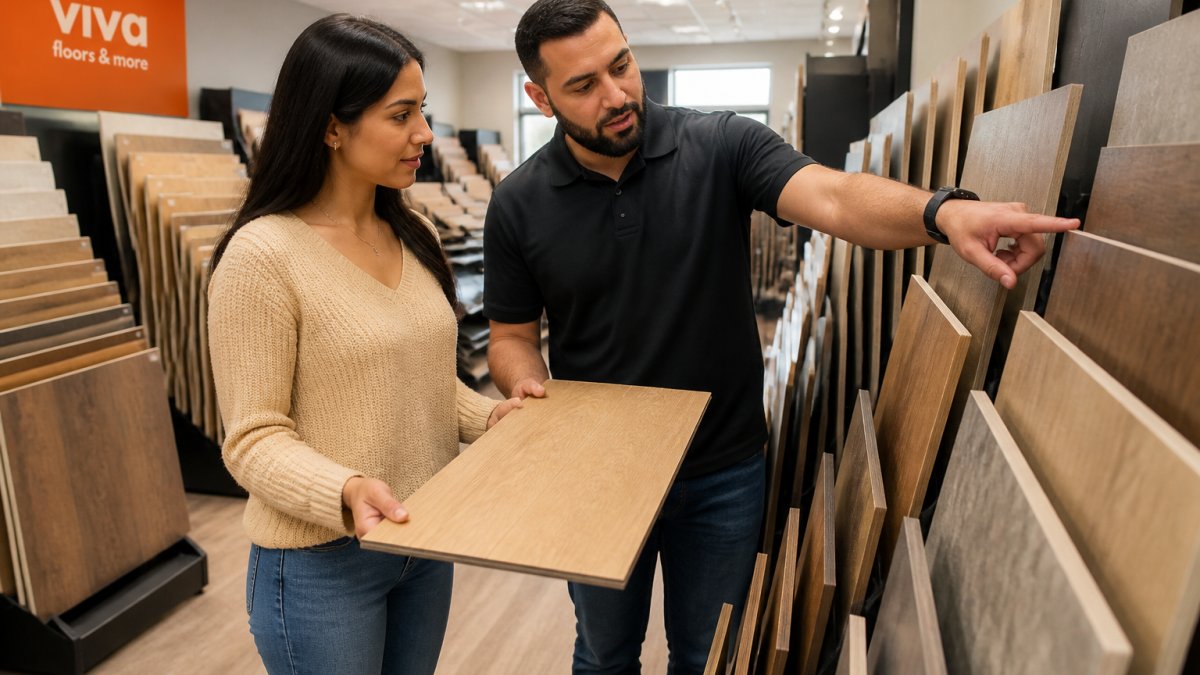
Solid hardwood and laminate remain the default choice for bedrooms, living rooms, and dining areas. Hardwood offers refinishing potential and resale value. Laminate delivers a similar look at a lower cost per square foot, and modern wear layers handle family traffic well.
For bulk orders, laminate is often the easier material to standardize across a whole house because dye lots are more consistent and installation is faster.
Resilient Vinyl, Ceramic Tile, and Porcelain Slabs for High-Traffic Environments
Luxury vinyl plank, ceramic tile, and porcelain slabs are the workhorses of commercial flooring. Vinyl handles moisture and heavy foot traffic. Tile and porcelain resist scratches, stains, and standing water, which matters in rental units, restaurants, and retail spaces.
| Material | Best For | Moisture Resistance | Maintenance |
|---|---|---|---|
| Hardwood | Living areas, resale value | Low | Refinish every 7-10 years |
| Laminate | Whole-home budgets | Moderate | Damp mop |
| Resilient vinyl | Kitchens, rentals, commercial | High | Sweep and damp mop |
| Ceramic tile | Bathrooms, entryways | High | Sealed grout care |
| Porcelain slab | High-traffic commercial | Very high | Minimal |
How to Estimate Flooring Waste for Large Projects
To estimate flooring waste for large projects, calculate total square footage, then add a waste factor of 5% for simple square rooms and 10-15% for rooms with angles, closets, or diagonal layouts. Bulk buyers who skip this step almost always come up short.
A common mistake is ordering the exact square footage and assuming the installer will "make it work." They can't. Every cut produces offcuts, and pattern-matched materials like plank flooring waste more than you'd expect.
Here's the basic formula:
- Measure each room's length x width to get square footage
- Add all rooms together for total square footage
- Multiply by 1.05 for simple layouts, 1.10-1.15 for complex ones
- Round up to the nearest full carton
For a 2,000-square-foot project with a 10% waste factor, you're ordering 2,200 square feet. That buffer covers miscuts, future repairs, and the inevitable damaged plank.
The Cost of Professional Flooring Installation in 2026
Installation is the line item that bulk buyers most often underestimate, because material pricing falls with volume while labor pricing does not. A crew still spends roughly the same hours per square foot on a 3,000-square-foot job as on a 500-square-foot job, so the labor share of your total project cost grows as the material share shrinks.
That inversion is the whole reason a bulk cost-benefit analysis matters. Here is how to run one before you commit to a pallet.
Build a Total-Cost Model, Not a Price-Per-Square-Foot Comparison
A retail box price and a wholesale pallet price are not comparable until you load both with the same costs. Build the model in four columns:
- Material cost, wholesale unit price × total square footage including waste factor.
- Freight and delivery, pallet shipping, liftgate or forklift charges, and any residential surcharge.
- Installation labor, quoted per square foot, plus removal, disposal, and subfloor prep.
- Accessories and contingency, underlayment, moulding, transition strips, adhesive, and a reserve for damaged or short shipments.
Most practitioners find the wholesale advantage is real but smaller than the sticker gap suggests once freight and accessories are loaded in. The savings usually come from three places: a lower unit price, avoided second-order freight, and avoided dye-lot mismatch on a reorder.
The Break-Even Question
Ask a simple question: at what project size does the bulk order beat buying box by box? The answer depends on your freight cost and your waste factor, not on a fixed square-foot threshold. A common pattern is that small jobs (a single room) rarely clear the freight minimum, while multi-room, multi-unit, or commercial jobs clear it easily because the fixed freight cost is spread across far more square feet.
Run the model twice, once at your low waste estimate and once at your high estimate, and see whether the bulk order still wins. If it only wins at the optimistic waste number, you have not found a margin, you have found a hope.
Factors That Push Installation Cost Higher
- Removing and disposing of existing flooring
- Leveling an uneven or out-of-spec subfloor
- Stair installation and custom transitions
- Furniture moving and room prep
- Pattern-matched layouts (herringbone, diagonal) that raise cut waste
What Bulk Buyers Should Negotiate
Because labor does not scale down with volume, the leverage in a bulk purchase is on the material and logistics side. Ask about contractor pricing tiers, Cash and Carry discounts if you can haul it yourself, whether accessories are stocked at the same price as the flooring, and whether delivery is quoted flat or by weight and distance. Those four items move the total-cost needle more than haggling over pennies per square foot.
For a current quote on your specific project, request an estimate from our team. Pricing depends on quantity, material, and site conditions, and we would rather give you an accurate number than a guess.
Texas Climate Considerations for Bulk Flooring Purchases
South Texas heat and humidity affect flooring more than most buyers realize. Acclimation matters here more than in drier climates, and moisture resistance should drive material choices in ground-floor and slab-on-grade installations.
Wood and laminate expand and contract with humidity swings. If you're buying bulk hardwood for a home in the Rio Grande Valley, plan to let the material acclimate on site for several days before installation. Skipping acclimation is the fastest route to buckling and gaps.
Vinyl and porcelain handle humidity with far less drama. For rental properties and commercial spaces where climate control is inconsistent, these materials are the safer bulk purchase.
Logistics and Freight Shipping for Bulk Flooring Materials
Bulk flooring ships by freight, not parcel carrier, and freight logistics is where first-time bulk buyers get surprised. Flooring is heavy, and palletized orders require either a loading dock, a forklift, or a liftgate delivery.
Plan for these logistics details before you order:
- Confirm whether the delivery address can accept a full pallet
- Ask whether liftgate service is included or an add-on
- Verify the freight class and weight of your order
- Schedule delivery for a day someone can inspect the shipment
Job site delivery is standard for contractor orders, but residential deliveries often need special handling. Damaged freight claims must be filed quickly, so inspect every pallet before signing.
What to Look for in a Wholesale Flooring Supplier
A good wholesale flooring supplier combines inventory depth, specification knowledge, and reliable job site delivery. Price alone is a poor filter, the supplier who cannot deliver on schedule costs you more than the one who charges slightly more and shows up on time. But "good supplier" is not a checklist you can act on. Here is a framework that is.
Evaluate on Five Axes, Not One
1. Inventory depth and consistency. Ask how many square feet of your chosen material they hold in stock and whether they can fill a reorder from the same dye lot months later.
**2.
3. Accessories stocked alongside flooring. Underlayment, moulding, transition strips, and adhesive should come from the same order. Sourcing accessories separately is where most projects blow their budget and lose time.
4. Delivery and freight capability. Confirm whether they deliver to a job site, whether liftgate service is available, and who handles a damaged-freight claim.
5. Pricing structure transparency. Contractor tiers, Cash and Carry options, and whether accessory pricing matches flooring pricing should be stated up front, not negotiated at the counter.
Red Flags
- No ability to confirm dye lot or lot number on a reorder
- Accessories quoted separately with no stock guarantee
- Freight terms that shift after the order is placed
- No written return or damage-claim policy
The Local Advantage
For bulk buyers, proximity still matters. A regional supplier can often deliver faster, absorb a short-shipment correction without a second freight bill, and let you inspect material before it ships. That is worth more than a marginally lower unit price from a distant distributor once you factor in the cost of a delayed install.
At Viva Floors & More, we have served the Rio Grande Valley since 1992 as a family-owned operation. Our two showrooms in Pharr and Brownsville stock one of the largest flooring selections in South Texas, including trusted brands like Cali, Robbins, Mohawk, Shaw, and MSI. Builders, remodel contractors, and DIY homeowners all get the same expert guidance and bulk pricing.
Federal Trade Commission guidance on buying and warranties
Frequently Asked Questions
What are the benefits of buying flooring materials in bulk?
Buying bulk flooring lowers your per-square-foot cost because suppliers pass on volume discounts. You also reduce the risk of running short mid-installation, since dye lots and batch colors stay consistent across the entire order. For large projects, one shipment means fewer delivery fees and less coordination. Contractors and builders in the Rio Grande Valley often order 10% to 15% extra to cover cuts and future repairs, and bulk pricing makes that buffer affordable.
How do I calculate the amount of flooring needed for a large project?
Measure each room's length and width in feet, multiply them to get square footage, then add all rooms together. For waste, add 10% for straight-lay installations and 15% for diagonal or herringbone patterns. If you are tiling, round up to full boxes since partial returns are rarely accepted. Bring your measurements to a supplier who can verify them against material specifications and help you estimate flooring waste for large projects accurately.
Is it cheaper to buy flooring materials directly from a distributor?
Direct distributor pricing often beats retail, especially on bulk quantities. You skip middleman markups and gain access to contractor pricing tiers. However, the cheapest online listing may not include freight, returns, or installation supplies. Factor in delivery to your job site, underlayment, floor moulding, and adhesive before comparing. A local wholesale distributor that stocks inventory can also prevent weeks-long delays if a shipment arrives damaged.
What are the common shipping considerations for bulk flooring orders?
Bulk flooring ships on pallets, usually via freight carriers rather than standard parcel services. Confirm whether the price includes liftgate delivery, since pallets can weigh over 1,000 pounds and require a forklift or ramp. Check the delivery address for truck access and clear space. Ask about lead times and whether the supplier coordinates job site delivery. For South Texas projects, humidity during transit can affect some materials, so inspect pallets on arrival before signing.