
 ultimate-guide
Cost of Professional Flooring Installation 2026
Table of Contents
- What Drives the Cost of Professional Flooring Installation in 2026
- Flooring Installation Labor Rates Per Square Foot
- Cost to Remove Old Flooring and Dispose of Materials
- Luxury Vinyl Plank Installation Cost: What to Expect
- Hidden Costs: Subfloor Repair, Baseboards, and Transition Strips
- DIY vs. Professional Installation: A Cost Comparison
- How to Save Money on Your Flooring Installation Project
- Frequently Asked Questions
Last Updated: September 15, 2026
What Drives the Cost of Professional Flooring Installation in 2026
The cost of professional flooring installation 2026 comes down to two variables: the material you choose and the condition of the room beneath your feet. This guide from Viva Floors & More breaks down where every dollar goes.
Square footage sets the baseline: a 200-square-foot bedroom and a 1,200-square-foot open floor plan use the same labor rate but wildly different totals. Most contractors price per square foot, then adjust for complexity.
Site conditions are where estimates drift. A flat, clean concrete slab is straightforward; an uneven subfloor, a staircase, or a room full of furniture changes the math entirely.
Material Choice and Square Footage
Material choice drives the largest single line item. Laminate and luxury vinyl plank sit at the lower end, hardwood and natural stone at the higher end, with ceramic tile and engineered wood in between.
Square footage multiplies that cost, then adds a waste factor for cuts, mistakes, and future repairs, higher for diagonal layouts and rooms with lots of corners.
- Straight lay: minimal waste
- Diagonal lay: more waste
- Herringbone or complex patterns: the most waste
Site Conditions and Installation Complexity
Site conditions determine how much prep the job needs before a single plank goes down. Subfloor preparation, moisture barriers, and leveling compound add labor hours a per-square-foot quote won't capture.
Installation complexity matters just as much. Stairs, closets, doorways, and transition strips slow crews down, each transition point is a small job inside the larger one.
Flooring Installation Labor Rates Per Square Foot
Flooring installation labor rates per square foot range widely by material, region, and installer experience. Labor is usually quoted separately from materials, and it's the number homeowners most often underestimate.
Labor-only pricing covers the crew's time, not the product. You supply the flooring, underlayment, and trim. That saves money if you source well, but shifts the risk of shortages or defects onto you.
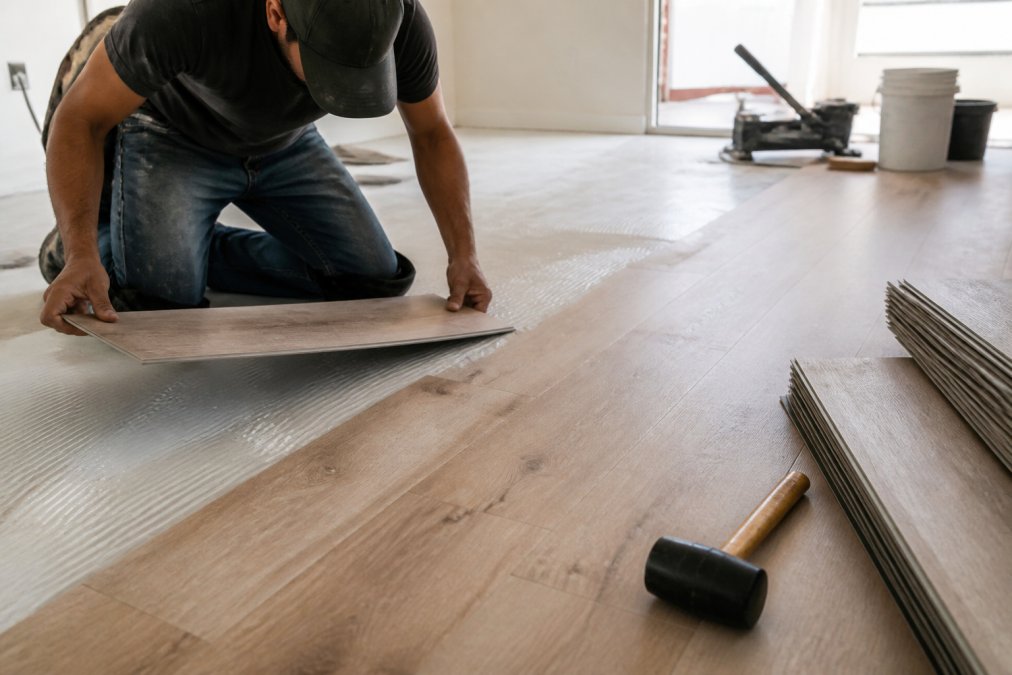
Installation methods affect the rate. Floating floor systems click together quickly and cost less in labor; glue-down and nail-down take longer and require more skill, so they carry higher rates.
| Installation Method | Labor Intensity | Best Suited To |
|---|---|---|
| Floating floor | Low | Laminate, luxury vinyl plank |
| Glue-down installation | Medium | Engineered wood, vinyl |
| Nail-down installation | High | Solid hardwood |
How Labor-Only Pricing Works
Labor-only pricing separates the crew's fee from the material bill: you buy the flooring, the installer charges for time, skill, and equipment. It works best when you know exactly what you want and can source it reliably.
The catch: under-order and the crew waits while you pay for the delay; damaged material is your cost. Labor-only pricing rewards prepared homeowners.
Regional Labor Rate Variations
Regional labor rates swing based on local demand, cost of living, and how many qualified crews operate nearby. Urban markets with tight labor run higher than rural ones, and construction booms push rates up further.
Local material availability plays a role too: when flooring must be shipped in, markup and lead times rise. Sourcing locally keeps both labor and material costs steadier.
Cost to Remove Old Flooring and Dispose of Materials
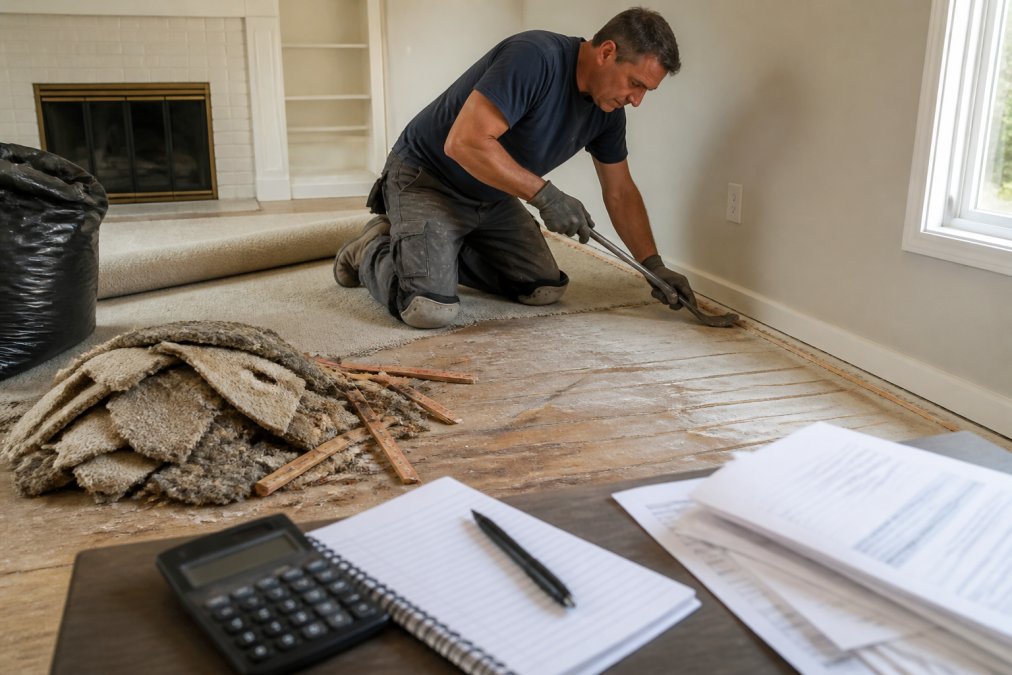
The cost of professional flooring installation 2026 includes removal of old flooring, a line item most estimates bury or skip. Tearing out carpet, tile, or glued-down hardwood takes real labor, and the debris has to go somewhere.
Removal difficulty depends on what's coming up. Carpet and padding pull up fast; ceramic tile is slow, dusty work that often damages the subfloor; glued-down hardwood takes longest because the adhesive fights every inch.
Disposal adds a second cost: old flooring is bulky and heavy, and many landfills charge by weight or volume.
Disposal Fees and Hauling
Disposal fees and hauling are usually quoted separately from removal labor. A crew that hauls debris away charges for the dump run, truck, and time; some contractors leave the pile for you, which lowers the quote but adds a chore.
If you're renovating on a budget, ask upfront whether haul-away is included. It's one of the most common surprises on a final invoice.
Luxury Vinyl Plank Installation Cost: What to Expect
Luxury vinyl plank installation cost lands in the middle of the range, cheaper than hardwood but above basic laminate. LVP is a favorite for high-traffic homes because it handles moisture and wear well.
The material varies by thickness and wear layer.
Hidden Costs: Subfloor Repair, Baseboards, and Transition Strips
Subfloor Repair and Leveling
Baseboard Removal, Reinstallation, and Painting
Three common approaches, each with a different cost profile:
Transition Strips and Trim
How to Get These Costs Into the Quote Up Front
The fix is procedural. Before you sign:
DIY vs. Professional Installation: A Cost Comparison
What DIY Actually Costs
The labor line disappears, but three new lines appear:
The Warranty and Insurance Angle Most Guides Miss
Side-by-Side Comparison
| Factor | DIY | Professional |
|---|---|---|
| Upfront cost | Lower labor, added tool and rental cost | Higher, but fixed and quoted |
| Time investment | High, weekends to weeks | Low, crew completes in days |
| Tool needs | Rental or purchase | Included in labor |
| Mistake risk | Higher, and rework is expensive | Lower, and often warrantied |
| Material warranty | Often void if instructions aren't followed | Typically preserved when installed per spec |
| Liability and insurance | Falls on the homeowner | Contractor's liability and workers' comp apply |
| Change orders | You absorb surprises | Priced and documented |
When DIY Makes Sense, and When It Doesn't
How to Save Money on Your Flooring Installation Project
Frequently Asked Questions
How much does it cost to floor 1000 sq. ft. fully installed?
A 1,000-square-foot installation total depends on material, labor rates, and site prep. Carpet and laminate sit at the lower end; hardwood and tile push higher. Add removal of old flooring, subfloor repair, and trim work if needed. Because pricing depends on your room dimensions, material grade, and site conditions, request a written installation estimate from Viva Floors & More for an accurate figure.
What factors influence the total cost of professional flooring installation?
The biggest drivers are square footage, material type, labor rates, and installation complexity. Site conditions matter too: uneven subfloors, moisture issues, and stairs all add labor. Other factors include removal of old flooring, baseboard removal and reinstallation, transition strips, and the waste factor from cuts. A professional contractor should itemize each of these on your installation quote.
What hidden fees should I expect when hiring a professional flooring installer?
Common add-ons include subfloor preparation, old flooring disposal, furniture moving, baseboard removal, and transition strips. Some installers charge extra for stairs, tight spaces, or after-hours work. Ask for a line-item quote that separates materials, labor, and site prep. If a bid looks unusually low, check whether disposal and subfloor work are excluded. Viva Floors & More provides transparent estimates so you can see every line before you commit.
Is it cheaper to buy flooring materials separately or through a contractor?
Buying materials yourself can save on material markup, but you take on measuring, ordering, and waste-factor risk. Contractors often get better pricing on hardwood flooring, luxury vinyl plank, and ceramic tile, and they handle returns. For a renovation budget, compare the total project cost both ways. Viva Floors & More serves DIYers and contractors, so you can price materials directly and decide what works for your project.
How long does professional flooring installation typically take?
Most single-room installations finish in one to two days. A whole-home project with removal, subfloor prep, and trim work can run three to seven days depending on square footage and material. Glue-down and nail-down installations take longer than floating floor systems. Moisture barrier curing and acclimation add time. Your installer should give a timeline in the written estimate.
How much does luxury vinyl flooring installation cost per square foot in 2026?
Luxury vinyl plank installation cost depends on the product grade, subfloor condition, and whether removal is included. LVP is one of the more affordable options because many planks use a floating floor system that installs faster than glue-down or nail-down methods. For a project-specific number, request a quote from Viva Floors & More with your room dimensions and current subfloor details.
Flooring costs are unpredictable because every room, subfloor, and material choice changes the total. Viva Floors & More removes that guesswork with expert consultation, a vast in-stock selection, and guidance for homeowners, builders, and contractors alike. Get started with Viva Floors & More and find the right flooring for your space and budget.