
 ultimate-guide
Find a Flooring Showroom Near Me: 2026 Buyer's Guide
Table of Contents
- What to Look for in a Local Flooring Showroom
- The Flooring Showroom Consultation Checklist
- Cost of Professional Flooring Installation in 2026
- Flooring Installation Timeline: From Sample to Final Walkthrough
- DIY vs. Professional Installation: Which Fits Your Project?
- Eco-Friendly Flooring Options and Long-Term Maintenance
- Design Style and Room-by-Room Selection
- Frequently Asked Questions
Last Updated: September 23, 2026
What to Look for in a Local Flooring Showroom
Finding a flooring showroom near me used to mean flipping through a phone book and hoping for the best. Today, the search is faster but the stakes are higher: flooring is one of the few home purchases where you genuinely need to touch the product before you buy. At Viva Floors & More, we've watched homeowners walk in with three online samples and walk out with a completely different choice once they saw how a plank looked under real light.
Material Selection: Hardwood, Laminate, Vinyl, Tile, and Carpet
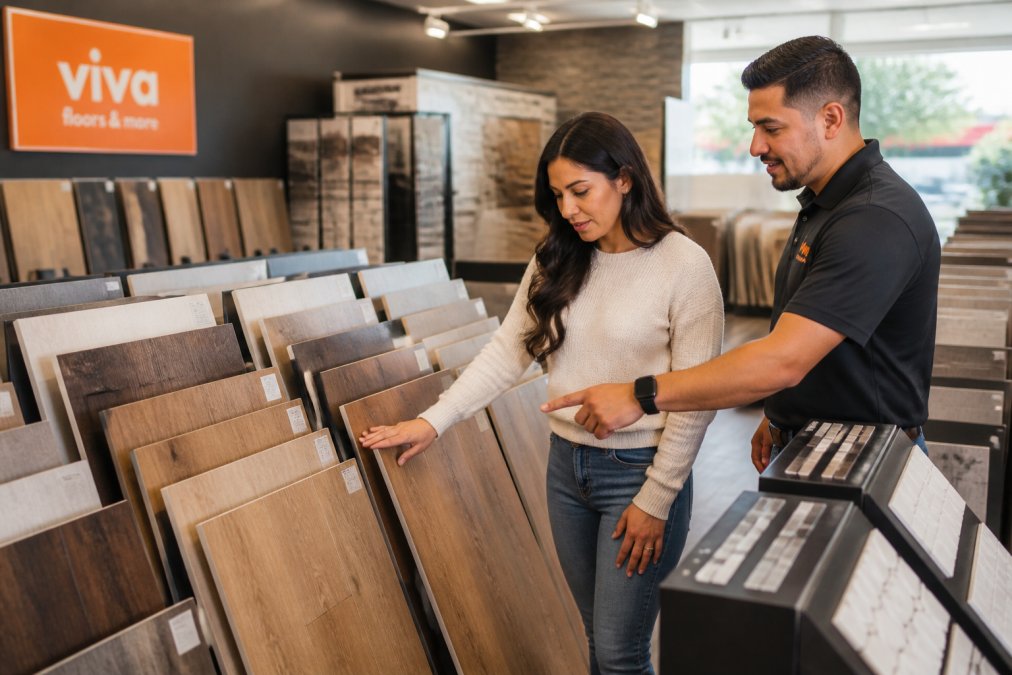
Each material solves a different problem. Hardwood and laminate bring warmth but react to humidity, which matters in South Texas. Vinyl and resilient flooring handle moisture and heavy traffic with far less fuss. Ceramic and porcelain tile win in wet rooms and entryways. Carpet remains the quietest, softest option for bedrooms.
How a Dealer Locator and Showroom Visit Save You Money
A dealer locator tool points you to nearby retailers, but the real savings happen once you're inside. You avoid return shipping on wrong orders, catch clearance and remnant stock, and get accurate square footage estimates before you commit. Staff can also flag subfloor preparation needs you'd never spot online, which prevents costly rework later.
The Flooring Showroom Consultation Checklist
Walking in without a plan is how people end up with flooring they regret. Use this checklist to make one visit count.
- Measure each room and write down square footage, including closets
- Photograph the room in daylight and at night
- Note moisture-prone areas: bathrooms, kitchens, laundry rooms
- List who lives there: pets, kids, heavy foot traffic
- Set a realistic budget for material and installation separately
- Ask about warranty terms in writing
- Request a take-home sample of your top two choices
- Confirm current local inventory and lead times
Questions to Ask About Durability, Warranty, and Moisture Resistance
Ask directly: "How does this hold up with two dogs and three kids?" A good consultant answers with specifics about wear layers, scratch resistance, and moisture resistance ratings, not vague reassurance.
Cost of Professional Flooring Installation in 2026
The cost of professional flooring installation in 2026 depends on material, room size, subfloor condition, and whether old flooring needs removal.
Typical Installed Cost Ranges by Material
Pricing depends on quantity, dates, and delivery. Your quote will vary with region, subfloor, and layout, so treat these as budgeting anchors, not quotes.
| Material | Typical Installed Cost per Sq Ft | Notes |
|---|---|---|
| Carpet | $2-$8 | Lowest material cost; pad and stretch-in labor add up |
| Luxury vinyl plank (LVP) | $3-$10 | Waterproof options sit at the top of the range |
| Laminate | $3-$8 | Click-lock installs are the cheapest labor |
| Engineered hardwood | $5-$12 | Glue-down or float; moisture barriers add cost |
| Solid hardwood | $6-$14 | Nail-down only; refinishable for decades |
| Ceramic / porcelain tile | $7-$20 | Large-format and patterned layouts push the high end |
What Actually Moves Your Number
- Square footage. Labor is priced per square foot, but most installers have a minimum job charge (often the equivalent of 100-200 sq ft) even for a powder room.
- Old flooring removal. Tear-out and disposal typically adds $1-$3 per sq ft. Carpet is cheap to pull; glued-down tile and hardwood are not.
- Subfloor prep. Leveling compound, plywood patching, and moisture barriers commonly add $1-$4 per sq ft. This is the line item most online quotes omit.
- Layout complexity. Diagonal runs, herringbone, stairs, and many doorways add labor hours. A simple rectangular bedroom is the cheapest possible install.
- Trim and transitions. Baseboard removal/reinstall and transition strips at doorways are frequently billed separately.
- Timing.
Estimate Your Own Project in Four Steps
- Measure each room in feet and multiply length by width. Add 5-10% for cuts and waste, more for diagonal or patterned layouts.
- Multiply by the material range above to get a rough material-plus-labor band.
- Add tear-out and prep if you have existing flooring or an uneven slab.
- Compare against a written, itemized estimate, not a single lump-sum number. A real estimate lists material, labor, removal, prep, and trim as separate lines.
Request an estimate from Viva Floors & More with your measurements in hand, and you will get an itemized figure tied to your actual rooms instead of a national average that never matches your project.
Flooring Installation Timeline: From Sample to Final Walkthrough
Most residential flooring projects move through five stages. The flooring installation timeline typically runs one to three weeks from sample selection to final walkthrough, depending on material availability and room count.
- Sample selection - take home two or three options and view them in your own light
- Measurement and estimate - confirm square footage and subfloor needs
- Material order and delivery - confirm local inventory to avoid long waits
- Installation - most single rooms finish in a day; whole homes take several
- Final walkthrough - inspect seams, transitions, and trim before final payment
DIY vs. Professional Installation: Which Fits Your Project?
DIY makes sense for small, simple rooms with forgiving materials like click-lock laminate or vinyl plank. Professional installation makes sense for tile, hardwood, stairs, and anything involving moisture or uneven subfloors.
Eco-Friendly Flooring Options and Long-Term Maintenance
Sustainability and longevity go hand in hand. Look for flooring made with recycled content, low-emission adhesives, and responsibly sourced wood. Bamboo, cork, and reclaimed hardwood appeal to buyers who want a lighter footprint, while durable vinyl and laminate reduce replacement frequency over time.
Maintenance extends the life of any floor:
- Vacuum or sweep weekly to remove abrasive grit
- Use felt pads under furniture legs
- Wipe spills promptly, especially in kitchens and baths
- Keep indoor humidity stable to prevent hardwood movement
- Follow the manufacturer's cleaning product recommendations
Design Style and Room-by-Room Selection
Most showroom guides tell you to "match material to room." That is true but can be overwhelming when you are standing in front of many samples. Pick your style first, then let the room and lifestyle filter the material.
Start With a Named Style, Not a Color
Flooring trends in 2026 cluster around a handful of recognizable looks. Naming your style narrows the field fast:
- Warm modern. Wide-plank white oak or engineered oak in a matte, low-sheen finish. Pairs with warm whites and natural wood furniture.
- Coastal / light and airy. Light blonde oak, whitewashed LVP, or pale porcelain tile. Reflects light in smaller rooms.
- Farmhouse. Distressed or hand-scraped hardwood, wide planks, visible grain. Often paired with shiplap and matte black fixtures.
- Industrial. Polished concrete-look tile, wide gray LVP, or dark stained hardwood. Hides wear well in high-traffic homes.
- Transitional. Mid-tone oak or greige LVP. The safest resale choice because it does not lock you into a trend.
The Room-by-Room Filter
Once you have a style, let function decide the material:
| Room | Best Material Fit | Why |
|---|---|---|
| Bathroom | Porcelain or ceramic tile, or waterproof LVP | Standing water and humidity destroy wood and standard laminate |
| Kitchen | Tile, LVP, or engineered hardwood | Spills, dropped items, and frequent mopping |
| Living room | Almost anything; prioritize durability | Highest traffic, most visible |
| Bedroom | Carpet, or warm hardwood/LVP | Comfort and quiet matter more than water resistance |
| Laundry / mudroom | Tile or waterproof LVP | Leaks and grit |
| Basement | Waterproof LVP or engineered hardwood over a moisture barrier | Below-grade humidity swings |
The Lifestyle Overlay
- Dogs and cats. Scratch resistance matters more than hardness. LVP with a thick wear layer and matte-finished tile hide claw marks; high-gloss hardwood shows every scratch.
- Kids. Skip anything that dents easily. Engineered hardwood and LVP tolerate dropped toys better than solid wood.
- Allergies. Hard surfaces beat carpet. If you want carpet in bedrooms, choose a low-pile option and vacuum with a HEPA filter.
- Entertaining. Wider planks and larger tiles mean fewer seams and a more open look.
- Resale in mind. Mid-tone, matte, wide-plank LVP or engineered oak is the safest bet across most markets.
Bring your style name, room list, and lifestyle notes to your showroom visit. It is the difference between shopping and deciding.
Frequently Asked Questions
What should I look for when visiting a local flooring showroom?
Look for a broad product catalog covering hardwood, laminate, vinyl, tile, carpet, and resilient flooring so you can compare materials side by side. Check whether the showroom stocks flooring samples you can take home to test under your own lighting. Ask about local inventory, installation services, curbside pick-up, and warranty terms. A good showroom also offers a flooring showroom consultation checklist and can answer questions about subfloor preparation and moisture resistance before you commit.
How much does it cost to install 1000 sq ft of flooring?
The cost of professional flooring installation depends on the material you choose, the condition of your subfloor, room layout, and labor rates in your area. Because pricing varies by project, ask your flooring contractor for a written estimate based on square footage, material selection, and any subfloor preparation needed. Request an estimate from Viva Floors & More for current project pricing.
Is it better to buy flooring from a big-box store or a local showroom?
A local showroom typically offers expert consultation, a wider selection of trusted brands, and faster access to local inventory. Big-box stores may carry limited stock and offer less guidance on material selection for specific rooms. A local retailer can walk you through durability, moisture resistance, and warranty details, and often supports both in-store shopping and curbside pick-up. For renovations in the Rio Grande Valley, a family-owned showroom often provides more personalized service.
What is the Rule of 3 for flooring?
The Rule of 3 for flooring means ordering at least 3 extra boxes (roughly 10% over your measured square footage) to cover cuts, waste, and future repairs. Flooring installation always generates offcuts, especially in rooms with closets, angles, or doorways. Keeping spare planks or tiles on hand lets you replace damaged sections later without mismatched dye lots. Your flooring contractor can calculate the exact overage based on your room layout and material.
How long does a professional flooring installation take?
A typical flooring installation timeline runs 1 to 3 days for a single room and 3 to 7 days for a whole-home project, depending on square footage, material, and subfloor preparation. Tile and hardwood take longer than laminate or vinyl because of drying and acclimation time. Add 1 to 2 weeks before installation for sample selection, ordering, and delivery. Ask your retailer for a written schedule so you can plan around furniture moves and household routines.
Do I need to prepare my home before a professional flooring installation?
Yes. Clear furniture and personal items from the rooms being worked on, remove wall hangings, and arrange for pets and children to stay elsewhere during installation hours. If old flooring must be removed, confirm whether that is included in your quote. Check that the subfloor is dry and level, since moisture issues can void a warranty. Your installer will confirm the final prep list, and many showrooms provide a pre-installation checklist during the consultation.
What are eco-friendly flooring options for a home renovation?
Eco-friendly flooring options include bamboo, cork, reclaimed hardwood, and laminate or vinyl made with low-VOC materials and recycled content. These choices reduce indoor air emissions and often pair with sustainable harvesting certifications. For high-traffic homes, look for durable, low-maintenance options like luxury vinyl plank with recycled backing. Ask your flooring showroom which products carry environmental certifications and how they compare on durability and warranty coverage.