
 blog
blog
Stain Resistant Tile for Kitchens: Best Options in 2026
Table of Contents
- Why Stain Resistant Tile Matters in Busy Kitchens
- Porcelain vs Ceramic Kitchen Tile: Which Handles Stains Better?
- Slip Resistant Kitchen Tile Options for Safety
- How to Clean Kitchen Floor Tiles Without Damaging the Surface
- Choosing the Right Finish: Matte vs Glossy for Stain Resistance
- Grout, Sealing, and Chemical Resistance: What Competitors Miss
- Kitchen Flooring vs Backsplash: Different Requirements for Stain Resistant Tile
- Conclusion
- Frequently Asked Questions
Last Updated: September 25, 2026
Why Stain Resistant Tile Matters in Busy Kitchens
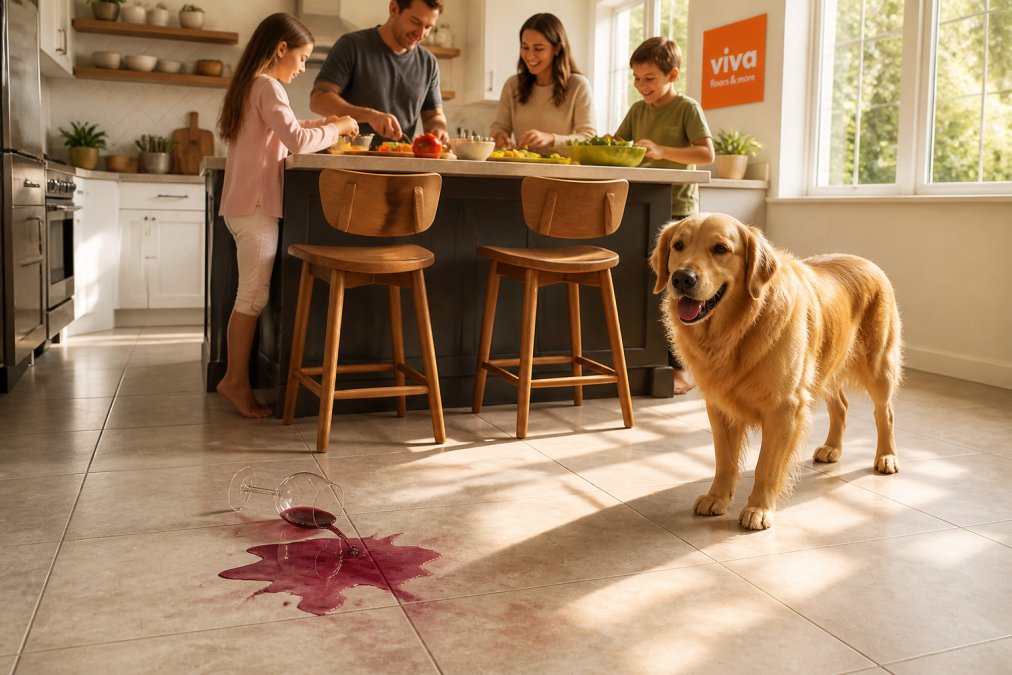
A kitchen floor takes more abuse than any other surface in the house, coffee, olive oil, tomato sauce, and muddy footprints can all land on it in one afternoon. For Rio Grande Valley homeowners, that daily punishment makes stain resistant tile for kitchens a practical necessity.
Porcelain vs Ceramic Kitchen Tile: Which Handles Stains Better?
Porcelain wins on stain resistance in most kitchens: it's denser, fired hotter, and absorbs very little water, leaving stains nowhere to settle. Ceramic works for many homes but needs more care in wet, messy zones.
Porosity and Water Absorption Rates
Porosity is the best predictor of how a tile handles spills. Porcelain tile is pressed from denser clay and fired hotter, making it nearly impermeable. Ceramic tile is softer and more absorbent, so unglazed or chipped ceramic can soak up liquids over time.
Durability and High-Traffic Performance
Foot traffic wears finishes faster than expected. Porcelain holds its texture and glaze under constant use, which matters in entryways opening into the kitchen. Ceramic handles moderate traffic but shows wear sooner in busy households with pets and kids.
| Feature | Porcelain Tile | Ceramic Tile |
|---|---|---|
| Water absorption | Very low, near impermeable | Higher, needs sealing |
| Stain resistance | Excellent | Good when glazed |
| Durability | High-traffic ready | Moderate traffic |
| Best for | Kitchens, mudrooms | Bathrooms, light use |
Slip Resistant Kitchen Tile Options for Safety
Safety and stain resistance often pull in opposite directions: glossy tile cleans easily but turns slick when wet. The fix is a textured matte finish with a slip-resistant rating, which grips underfoot while repelling spills.
How to Clean Kitchen Floor Tiles Without Damaging the Surface
The right routine protects the finish for years. Most damage comes from harsh cleaners and abrasive tools, not from normal wear.
- Sweep or vacuum daily to lift grit before it scratches the glaze
- Mop with warm water and a pH-neutral cleaner
- Wipe spills promptly, especially oil, wine, and tomato
- Skip steel wool and abrasive powders that dull the surface
- Avoid bleach-heavy cleaners on colored grout
Choosing the Right Finish: Matte vs Glossy for Stain Resistance
Finish is the most misunderstood variable in stain-resistant tile. Homeowners assume glossy means easier to clean, but finish affects how stains behave, how visible they are, and how slippery the floor gets when wet, getting it wrong is a common reason kitchen floors disappoint.
How Finish Affects Stain Behavior
A glazed tile has a thin, glass-like layer fired onto the body. That glaze resists stains and can be glossy, satin, or matte; the chemistry is similar across finishes, the difference is texture and light reflection.
- Glossy (polished) finishes have a smooth, highly reflective surface. Liquids bead up and wipe away easily, and there's nowhere for pigment to hide. The downside is visibility: every streak, water spot, footprint, and smear of grease shows under kitchen lighting, especially on dark colors.
- Matte finishes have a micro-textured surface that scatters light instead of reflecting it. That texture hides smudges, water spots, and light scratches far better than gloss. The trade-off is that some matte glazes are slightly more porous at the surface, so prompt cleanup still matters, and textured surfaces can hold onto fine dust.
- Satin finishes sit in the middle, a soft sheen that reflects some light but hides more than gloss. For most busy kitchens, satin is the practical sweet spot.
Slip Resistance and the Coefficient of Friction
Finish and slip resistance are linked: polished or glossy tile turns slick when wet, a real concern near the sink, dishwasher, and refrigerator, the three spots where water lands most often.
Where Each Finish Belongs in a Kitchen
Finish should match the job, not the showroom lighting.
- Kitchen floors: matte or satin, textured enough for grip, in a mid-tone color that hides crumbs and dust between cleanings. This is where stain resistance and safety have to coexist.
- Backsplashes: glossy works well here. A backsplash takes splatter and steam but no foot traffic, so slip resistance is irrelevant, and the easy-wipe surface is an advantage. Glossy also reflects light and makes a small kitchen feel brighter.
- Countertops: if you're using tile, a honed or matte finish hides etching and knife marks better than polished, though it requires more careful sealing depending on the material.
Color, Lighting, and the Stain-Visibility Trap
Finish and color interact in surprising ways. Glossy dark tile shows every water spot and dust particle; matte light tile hides smudges but shows dark crumbs and pet hair. A matte mid-tone, warm gray, greige, or stone-look, is the most forgiving combination in a working kitchen.
Cleaning Implications by Finish
Glossy tile rewards a quick squeegee or microfiber wipe, streaks show instantly, so dry as you go. Matte tile forgives a damp mop and air-drying, but texture traps fine dust, so a vacuum with a hard-floor attachment beats a broom. Neither finish should see abrasive powders, steel wool, or acidic cleaners, which dull the glaze.
Grout, Sealing, and Chemical Resistance: What Competitors Miss
Grout is where most kitchen tile stain problems begin. The tile is usually innocent, porcelain and glazed ceramic resist liquids well, but cement-based grout is porous by design and grabs grease, coffee, wine, and tomato sauce if unprotected. Most buying guides skip this, and it's why a floor that looked spotless at installation can look dingy within a year.
Epoxy Grout vs. Cementitious Grout for Stain Prevention
The two main grout families behave very differently in a kitchen.
- Cementitious (cement-based) grout is the traditional option. It's made from Portland cement, sand, and pigments, mixed with water. It's inexpensive, widely available, and easy for a installer to work with. The trade-off is porosity: even polymer-modified versions absorb liquids, and once grease or red wine soaks in, the pigment can shift permanently. Cementitious grout needs sealing and periodic resealing to stay stain resistant.
- Epoxy grout is a two-part resin system, typically an epoxy resin and a hardener, that cures into a dense, non-porous surface. It doesn't absorb water or oils the way cement grout does, so it resists staining far better and generally doesn't need sealing. It costs more per square foot and is less forgiving to install, especially on vertical surfaces, but for a busy kitchen it's the more durable choice.
- Urethane grout sits between the two. It's pre-mixed, flexible, and more stain resistant than cement grout, though not quite as impervious as epoxy. It's a reasonable middle option for homeowners who want better stain performance without the epoxy price or installation complexity.
Sealing Schedules and What Actually Works
Sealing isn't one-time. A penetrating sealer soaks into cement grout and blocks liquid from the pores, but it wears down with daily mopping and foot traffic. Most practitioners recommend resealing cement grout every 12 to 18 months in a busy kitchen, and more often in front of the sink or stove.
How to Test Tile and Grout for Chemical Resistance
Kitchen spills are mildly acidic or oily and can etch a glaze or dull a finish over time. Test a spare tile or sample before you commit, using the substances your kitchen actually produces.
- Lemon juice and vinegar. These are weak acids. Place a few drops on the tile surface and on a grout sample, let sit for 15 to 30 minutes, then wipe clean. A quality glazed or porcelain tile should show no change. If the surface dulls or the grout lightens, that material is a poor fit for a kitchen where you cook with citrus or vinegar regularly.
- Red wine and tomato sauce. These combine acid with pigment, the worst combination for porous surfaces. Apply, let sit, wipe, and check for a ghost stain. This is the single most useful test for a kitchen tile.
- Cooking oil. Oil doesn't etch, but it penetrates unsealed cement grout and darkens it. A drop of oil on grout left for an hour will show you how the grout will age.
- Your actual cleaners. Check the tile manufacturer's guidance on which cleaners are safe. Acidic cleaners, including many bathroom and hard-water products, can etch a glaze or damage grout over repeated use. pH-neutral cleaners are the safe default for everyday mopping.
Matching Grout Color to Stain Reality
Grout color is a stain-management decision, not just design. Light grout shows every spill and bit of grease; dark grout hides stains but can look heavy against light tile. A mid-tone, warm gray, taupe, or matched to the tile, is most forgiving in a working kitchen. If you love white grout, epoxy is the only version that holds up to a busy household without constant resealing.
Kitchen Flooring vs Backsplash: Different Requirements for Stain Resistant Tile
Floors and backsplashes face different enemies. Kitchen floor tile must handle foot traffic, dropped utensils, and standing water. A backsplash deals with splatter, steam, and heat, but almost no wear.
Conclusion
Picking kitchen tile balances stain resistance, durability, and how a surface actually lives in your home. The wrong choice shows up fast, and replacing a floor costs far more than choosing well the first time.
Frequently Asked Questions
What type of tile is best for kitchens?
Porcelain tile is generally the best choice for kitchens because of its low porosity and high stain resistance. It handles spills, grease, and heavy foot traffic well. Ceramic tile works for lighter use, but porcelain's density and vitrified surface make it more durable for busy cooking areas. For a kitchen with kids and pets, porcelain is the safer bet.
Is porcelain or ceramic tile better for kitchen floors?
Porcelain outperforms ceramic in kitchens due to its lower moisture absorption rate, usually under 0.5%. Ceramic absorbs more water and may need sealing. Porcelain also resists scratches and stains better under heavy use. If your kitchen sees daily cooking and foot traffic, porcelain is the stronger option. Ceramic can work for low-traffic kitchens or as a backsplash.
Do I need to seal stain-resistant kitchen tiles?
Most porcelain tiles with a vitrified surface do not need sealing because they are impermeable. Ceramic tiles with a glossy glaze also resist stains without sealing. However, the grout lines between tiles are porous and should be sealed or treated with epoxy grout. Sealing grout prevents stains from oil, wine, and sauces from soaking in. Always check the manufacturer's recommendation for your specific tile.
How do I remove stubborn stains from kitchen floor tiles?
For stubborn stains on kitchen floor tiles, start with a paste of baking soda and water for grease or oil. For wine or juice, use a diluted hydrogen peroxide solution. Avoid abrasive cleaners on glossy glaze, as they can scratch the surface. For grout stains, a soft brush with oxygen bleach works well. Always test on a small area first. Regular spill cleanup prevents most stains from setting.
What color tile is the easiest to keep clean?
Mid-tone colors like beige, greige, and warm gray hide crumbs and light stains better than white or black. White shows every speck of dirt, while black highlights dust and water spots. A matte finish in a mid-tone shade with a subtle pattern is the most forgiving for busy kitchens. Textured surfaces also camouflage daily messes better than smooth, glossy tiles.