 how-to
Bulk Flooring Supplies for Local Contractors: 2026 Guide
Table of Contents
- Why Bulk Flooring Supplies Change Your Project Math
- Choosing a Contractor Flooring Supplier: What Actually Matters
- How a Flooring Material Cost Estimator Fits Your Bid
- Flooring Installation Waste Factor: Ordering the Right Quantity
- Your Contractor Flooring Quote Checklist Before You Commit
- Delivery, Lead Times, and Jobsite Coordination
- Returns, Overage, Damaged Goods, and Warranty Handling
- Conclusion
- Frequently Asked Questions
Last Updated: October 12, 2026
Why Bulk Flooring Supplies Change Your Project Math
Bulk flooring supplies for local contractors are the single biggest lever on whether a project finishes on budget or bleeds money for months.
Here is the uncomfortable truth most supply listings avoid: the lowest quoted unit price is rarely the lowest total project cost.
This guide walks through the full contractor purchasing process, from quantity math to delivery coordination to damaged-goods claims.
Choosing a Contractor Flooring Supplier: What Actually Matters
A contractor flooring supplier earns repeat business on inventory accuracy and terms, not on the size of the showroom. The best supplier is the one whose stock counts match reality and whose ordering process protects your schedule.
Most contractors evaluate suppliers on price per square foot and stop there. That is a mistake. The relationship you actually need covers four things: verified stock, consistent product lots, clear purchasing terms, and a person who answers when a jobsite problem hits at 7 a.m.
Account setup and purchasing terms
Set up a contractor account before you need it. Walking in with an account already open means faster quotes, cleaner invoicing, and a paper trail for warranty claims later.
Most suppliers that sell at trade pricing ask for some combination of the following before they will quote you contractor rates:
- A business license, contractor license number, or proof of trade status
- A resale or sales-tax exemption certificate, so tax is not charged on material you will resell or install under a contract
- A signed credit application if you want net terms instead of paying at pickup or delivery
Ask these questions during setup:
- What are the payment terms and credit options?
- Is there a minimum order quantity for contractor pricing?
- Can quotes be held for a defined period?
Get the answers in writing. Verbal promises about "we'll work with you" disappear when a delivery slips.
Inventory accuracy and product-lot consistency
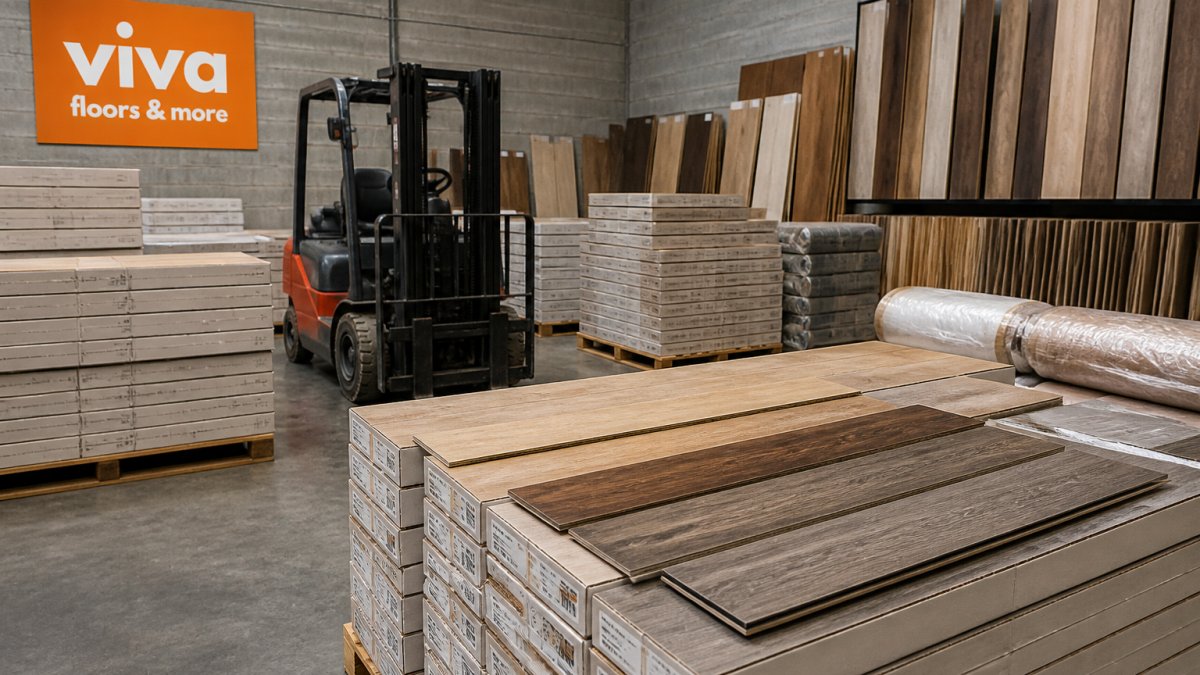
Product-lot consistency is the quiet killer of large installations. If half your order comes from one manufacturing run and half from another, dye lot and sheen can differ visibly across a room.
According to the National Wood Flooring Association's guidance on installation and acclimation, material from different production lots should be checked before installation begins.
A practical way to verify this before you commit:
- Ask for the lot or run number on the quantity you need, not just the SKU.
- Ask whether that quantity is on the floor now or on a purchase order.
- Ask what happens if the lot runs short mid-order, will they substitute a different lot, or hold the balance until matching stock arrives?
- When the material lands, open two or three cartons from different pallets and compare them side by side before the crew starts.
If the supplier cannot tell you the lot number and the on-hand count for that lot, you are not buying verified stock. You are buying a promise.
How to compare contractor pricing without getting fooled
Wholesale discounts are easy to advertise and hard to compare. Two suppliers can quote the same product at different unit prices and still land at very different total project costs once freight, tax, waste, and delivery are added.
Build a simple side-by-side for each quote that includes:
- Unit price at your actual volume tier, not the advertised tier
- Freight or delivery charge, and whether it is flat or weight-based
- Sales tax treatment, and whether your resale certificate removes it
A supplier who is five percent cheaper on the unit line but charges freight, a fuel surcharge, and a restocking fee on overage can easily cost more than the supplier with the higher sticker price.
How a Flooring Material Cost Estimator Fits Your Bid
A flooring material cost estimator is any tool or process that converts room dimensions into an accurate material quantity and total cost before you commit to a bid. It is the difference between a profitable quote and a guess.
Contractors who bid from rough square footage lose money on complex layouts. A proper estimator accounts for room shape, transitions, closets, and the waste factor. Build your estimate in this order:
- Measure each room's length and width in feet
- Calculate square footage per room, then total it
- Add your waste factor percentage
- Multiply by the per-unit price at your volume tier
- Add freight, trim, underlayment, and adhesive
- Add a contingency line for damaged or short shipments
FEMA's guidance on building material quantity estimation reinforces the same principle for disaster rebuilding: order to measured need plus a defined buffer, never to a round number that feels safe.
Flooring Installation Waste Factor: Ordering the Right Quantity
The flooring installation waste factor is the percentage you add to measured square footage to cover cuts, defects, and future repairs.
Waste factor is not one number. It changes with the material and the layout.
| Material | Typical Waste Factor | Why It Changes |
|---|---|---|
| Hardwood | 5-10% | Direction changes, board grading |
| Laminate | 5-10% | Plank layout, pattern matching |
| Vinyl (LVP/LVT) | 5-10% | Room shape, cut complexity |
| Carpet | 5-10% | Seam placement, roll width |
| Tile | 10-15% | Cuts, breakage, pattern work |
Diagonal layouts, herringbone patterns, and rooms with many corners push you toward the top of each range. Simple square rooms let you stay at the bottom.
Your Contractor Flooring Quote Checklist Before You Commit
A contractor flooring quote checklist is the set of items you verify in writing before signing or paying a deposit. Missing any one of these can turn a profitable job into a dispute.
Run every quote through this list:
- Unit price confirmed at your volume tier
- Total quantity and waste factor stated
- Product lot number recorded
If a supplier will not put lead times and return terms in writing, treat that as your answer. The quote is not complete.
Delivery, Lead Times, and Jobsite Coordination
Delivery logistics decide whether a bulk order helps or hurts you. Coordinate the delivery window against your crew schedule, not the other way around.
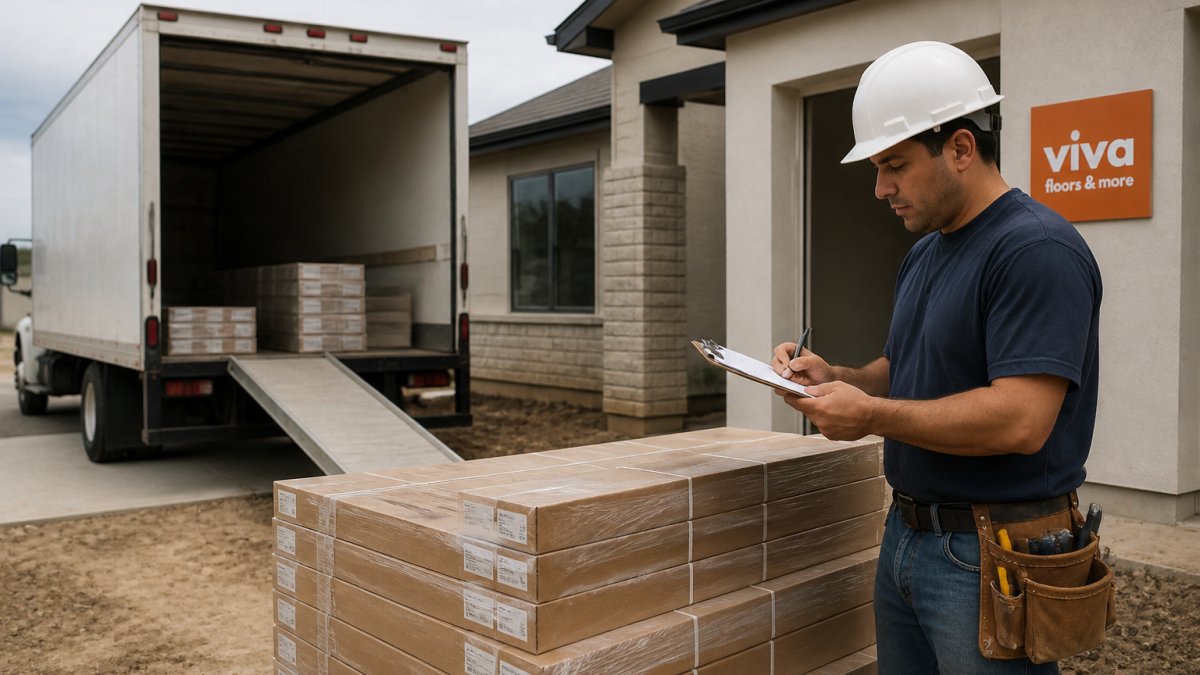
A few coordination habits separate smooth jobs from chaotic ones:
- Confirm the delivery address and access before the truck rolls
- Decide who signs for the shipment and counts the boxes
- Stage material in a climate-controlled space for acclimation
That last point matters more than most contractors realize. Photos taken at delivery are your evidence if a damaged-goods claim becomes necessary.
Returns, Overage, Damaged Goods, and Warranty Handling
Returns and warranty claims are where a supplier's real character shows. Know the policy before you order, not after something goes wrong.
Most suppliers set a return window, require unopened original packaging, and charge a restocking fee on overage. Damaged goods usually must be reported within a short window after delivery, which is why same-day inspection matters. Warranty terms vary by manufacturer, and installation errors often void coverage.
Overage and returns
Overage is the material you ordered but did not install. It is not automatically waste, a leftover box from the same lot is your future repair stock, but it is also not free money if you try to return it.
What to confirm before you order:
- The return window, counted from delivery or pickup, not from the day you finish the job
- Whether returns are accepted on full cartons only, or on opened cartons with a minimum quantity
- The restocking fee, usually a percentage of the returned material's value
- Whether the return must be from the same lot number as the original order
A common pattern is to keep one unopened carton per lot as attic stock and return only the clearly excess full cartons inside the window.
Damaged goods and shortage claims
Damage and shortage claims are time-sensitive. Most suppliers require reporting within a short window after delivery, and some require it before the driver leaves the property. Once that window closes, the claim is usually yours to absorb.
A claim-ready delivery routine:
- Count the cartons against the packing slip before signing.
- Open at least one carton per pallet and inspect for crushed edges, water damage, or broken tile.
- Photograph the pallets, the packing slip, and any damage before the driver leaves.
- Note any shortage or visible damage on the delivery paperwork and have the driver sign it.
- Report the claim the same day, in writing, with the photos attached.
That last point matters more than most contractors realize. Photos taken at delivery are your evidence if a damaged-goods claim becomes necessary. A signed clean delivery receipt is very hard to overturn later.
Warranty handling and what voids coverage
Manufacturer warranties generally cover defects in the material, not failures caused by the installation or the environment. That distinction decides most claims.
Common reasons a claim gets denied:
- Installation outside the manufacturer's written instructions
- No expansion gap at the perimeter, causing buckling
- Moisture readings not taken, or material installed over a wet substrate
- Acclimation skipped or done in an uncontrolled space
For commercial flooring and residential projects alike, keep your documentation together: order confirmation, lot numbers, delivery photos, moisture readings, and installation records. When a claim comes up, that folder is your proof that the failure is in the material and not in the install.
Conclusion
Bulk flooring orders are a procurement problem, not a shopping problem, and the contractors who treat them that way protect their margins. Viva Floors & More helps South Texas builders and installers get this right with contractor account support, a deep in-stock inventory of trusted brands like Cali, Robbins, Mohawk, Shaw, and MSI, and two showrooms in Pharr and Brownsville for local pickup.
Frequently Asked Questions
Where can contractors buy bulk flooring supplies?
Contractors typically buy bulk flooring supplies through a local flooring store or supply store that stocks full product categories, including hardwood, laminate, vinyl, carpet, tile, and rubber flooring. A local supplier lets you verify inventory in person, arrange local pickup or delivery, and confirm product-lot consistency across a large order. Before committing, ask about contractor pricing, volume discounts, and whether your quantities are in stock or need to be ordered. Requesting a quote directly from the supplier is the fastest way to confirm availability and your service area.
How do contractors estimate how much flooring to order?
Measure each room, calculate square footage, then add a flooring installation waste factor for cuts, pattern matching, and future repairs. Straight-lay installations usually need less overage than diagonal or herringbone layouts, and rooms with lots of angles or doorways need more. Track the total by product SKU and dye lot so every box matches. A flooring material cost estimator helps you convert square footage into boxes, but confirm the final quantity with your supplier before you place the flooring order.
Can contractors get wholesale pricing on flooring materials?
Many flooring suppliers offer wholesale pricing or volume discounts to business customers, but terms vary. Ask whether you need a contractor account, a minimum order quantity, or a tax ID before bulk pricing applies. Wholesale pricing usually depends on product category, quantity, and delivery method, so the same order can price differently depending on timing and logistics. Get the quote in writing, confirm what is included, and ask how long the pricing holds before you commit to a purchase order.
How much extra flooring should contractors order for waste and repairs?
A common range is 5 to 10 percent overage for straightforward installations and 10 to 15 percent for complex layouts, diagonal patterns, or rooms with many cuts. Keep at least one unopened box from the same dye lot for future repairs. If the flooring order arrives short, ordering more later risks a lot mismatch. Ask your supplier about return policies on unopened overage before you buy, so you are not stuck with extra inventory you cannot use.