 blog
blog
Durable Flooring for High Traffic: 2026 Buyer's Guide
Table of Contents
- Durable Flooring for High Traffic: What Actually Holds Up
- LVP and Tile: The Two Workhorses for Busy Rooms
- Flooring Wear Layer Explained: The Number That Predicts Longevity
- Hardwood vs Laminate for High Traffic: An Honest Comparison
- Best Flooring for Pets and Kids: Scratch, Stain, and Water Resistance
- Subfloor Prep, Acoustic Performance, and Repairability
- Commercial vs. Residential Requirements and Maintenance
- Choosing Durable Flooring for Your Home: A Decision Framework
- Frequently Asked Questions
Last Updated: October 7, 2026
Durable Flooring for High Traffic: What Actually Holds Up
Durable flooring for high traffic is a floor surface engineered to resist wear, moisture, and impact in rooms that see constant use, such as kitchens, hallways, and commercial entries. Getting it right comes down to three specs: wear layer thickness, core composition, and moisture resistance.
Below, we break down how the major materials compare, which numbers actually predict longevity, and where most buyers go wrong.
Quick Comparison: Materials at a Glance
| Material | Best For | Water Resistance | Repairability |
|---|---|---|---|
| Luxury vinyl plank | Pets, kids, busy households | High | Moderate |
| Porcelain tile | Entryways, kitchens, commercial | High | Low |
| Laminate | Budget high-traffic rooms | Low to moderate | Low |
| Engineered wood | Living areas, resale value | Moderate | Moderate |
How We Evaluated These Materials
We scored each material on four criteria: abrasion resistance, water resistance, repairability, and how well it handles subfloor imperfections. Wear layer thickness carried the most weight because it predicts surface longevity better than any marketing claim. Maintenance demands and installation complexity rounded out the scoring, since a floor that is hard to clean or install rarely stays in good shape.
LVP and Tile: The Two Workhorses for Busy Rooms
Luxury vinyl plank and tile handle foot traffic better than any other category we stock. For most busy households, luxury vinyl plank wins on comfort and repairability, while porcelain wins on absolute scratch and moisture resistance.
Luxury Vinyl Plank (LVP) Pros and Cons
Pros
- Comfortable underfoot and warmer than tile
- Handles moisture well in kitchens and baths
- Individual planks can be replaced without tearing out the whole floor
Cons
- Thinner wear layers wear through faster in entryways
- Heavy furniture can leave indentation marks
- Lower-end products can look flat compared to wood
Porcelain vs. Ceramic Tile for Foot Traffic
Porcelain tile is denser and more water-resistant than ceramic, which makes it the better pick for entries, mudrooms, and commercial spaces. Ceramic costs less and works fine in low-traffic rooms. Both are slip-resistant when you choose a textured surface finish, and both tolerate cleaning protocols that would damage laminate or wood.
Flooring Wear Layer Explained: The Number That Predicts Longevity
The wear layer is the clear protective topcoat on vinyl and laminate flooring, measured in mils (one mil equals one-thousandth of an inch), and it is the single best predictor of how long a floor survives heavy use.
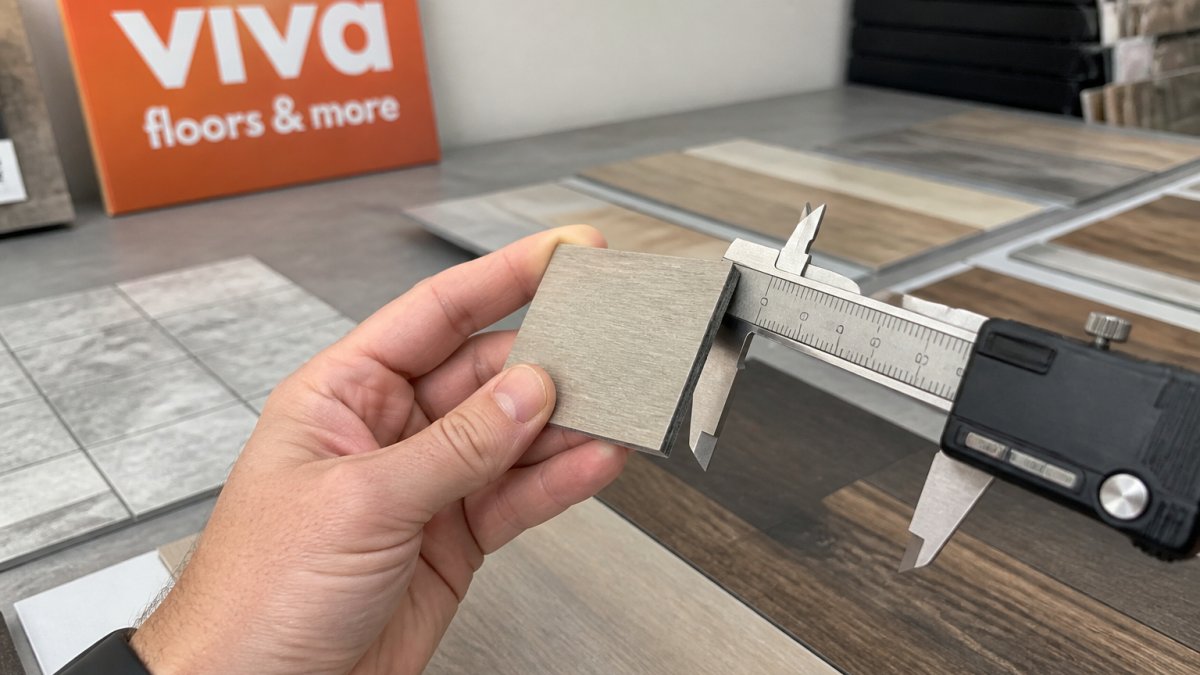
What the Mil Number Actually Means
Wear layer ratings on vinyl and laminate products generally fall into recognizable bands. Most practitioners group them like this:
- 6 to 8 mil: light residential use, bedrooms, closets, low-traffic offices
- 12 mil: standard residential, living rooms, dining rooms, moderate family traffic
- 20 mil: heavy residential, kitchens, hallways, mudrooms, homes with large dogs
These bands are not arbitrary. Abrasion resistance scales roughly with thickness, so a 20 mil floor does not simply last "a little longer" than a 6 mil floor, it can outlast it several times over in the same hallway. That is why two planks that look identical on the showroom floor can perform completely differently after three years of daily footfall.
Vinyl Wear Layers vs. Laminate Wear Layers
Vinyl and laminate both publish a wear layer number, but the number does not mean the same thing on both products. Vinyl wear layers are measured in mils of solid vinyl or urethane. Laminate wear layers are typically described using an AC rating (AC1 through AC5) tied to the European abrasion standard, and some manufacturers also publish a mil equivalent.
How to Verify the Number Before You Buy
Ask for the mil rating in writing, on the spec sheet, the carton label, or the manufacturer's technical data page, before you commit. A few practical checks:
- The wear layer is listed separately from the overall thickness. A "5 mm thick" plank with a 6 mil wear layer is a thin-wear-layer product, no matter how thick the core sounds.
- Warranty language often reveals the intended use. A residential-only warranty usually signals a thinner wear layer than a product warrantied for commercial application.
- If a seller cannot tell you the wear layer, that is your answer.
Hardwood vs Laminate for High Traffic: An Honest Comparison
Laminate outperforms hardwood on scratch resistance and cost, but hardwood wins on repairability and resale value. Solid hardwood dents and scratches under pet claws and heavy footfall, and refinishing is the only real fix.
Engineered wood sits between the two. Its plywood core handles moisture and temperature shifts better than solid hardwood, making it a reasonable option for high-traffic living areas where you still want a real wood surface.
Best Flooring for Pets and Kids: Scratch, Stain, and Water Resistance
Luxury vinyl and porcelain tile are the best flooring for pets and kids because both resist scratches, stains, and standing water. Pet-specific durability comes down to three metrics: scratch resistance, indentation resistance, and waterproof construction.
For households with large dogs, look for thick wear layers and rigid cores that resist claw marks and dropped toys. Tile handles accidents best since it will not absorb liquid, but it is harder underfoot for toddlers.
Subfloor Prep, Acoustic Performance, and Repairability
Two factors separate a floor that lasts from one that fails early: what is underneath it and how easily it can be fixed. Neither gets enough attention in most buying guides.
Subfloor and Underlayment for High-Traffic Zones
High-traffic zones need a flat, dry, structurally sound subfloor. We recommend checking for moisture and leveling low spots before installation. A quality underlayment adds impact resistance, acts as a moisture barrier, and quiets footfall, which matters in upstairs rooms and open floor plans.
Repairability vs. Replacement
Repairability should drive your material choice more than most buyers expect. LVP and tile allow spot repairs; laminate and solid hardwood often mean replacing a whole section. In rental properties and commercial spaces, that difference decides your long-term maintenance budget.
Commercial vs. Residential Requirements and Maintenance
Commercial grade flooring is built to a higher standard than residential products, with thicker wear layers and stricter slip-resistant ratings. If you are flooring a rental or business space, specify commercial grade even if the traffic looks moderate today.
What Actually Separates Commercial From Residential
The difference is not marketing language, it shows up in measurable ratings:
- Wear layer: Commercial vinyl typically starts around 20 mil and runs to 28 mil or higher; residential products commonly sit between 6 and 12 mil.
- Slip resistance: The most widely cited reference is the DCOF (Dynamic Coefficient of Friction) value for tile, measured under the ANSI A326.3 test method. A DCOF of 0.42 or higher is the commonly referenced threshold for level interior commercial floors that may be walked on when wet. Residential rooms generally are not held to that threshold, but wet areas like bathrooms and entries benefit from it.
- Abrasion and indentation ratings: Laminate uses the AC1-AC5 scale, with AC4 and AC5 aimed at commercial traffic. Vinyl and tile publish their own abrasion and breaking-strength figures on the technical data sheet.
Slip Resistance in Plain Terms
Slip resistance is where commercial and residential specs diverge most visibly. A polished porcelain that looks great in a residential living room may fall below the DCOF threshold for a commercial entry that sees rain or spills. Textured and matte finishes generally raise the DCOF value. If you are specifying tile for a commercial space, ask for the DCOF number on the technical data sheet, not just the word "slip-resistant" on the box.
Maintenance Protocols by Material
Maintenance demands differ by material, and matching your cleaning routine to the surface protects the wear layer and extends longevity:
- Porcelain and ceramic tile: Tolerates regular damp mopping and most neutral-pH cleaners. Avoid acidic cleaners on cementitious grout, which can erode it over time. Grout sealing every few years keeps stains from setting in high-traffic entries.
- Luxury vinyl plank: Damp mop with a pH-neutral vinyl cleaner. Avoid steam mops on glue-down installations and abrasive pads, which can dull the wear layer. Felt pads under furniture prevent indentation marks.
- Laminate: Dry or barely damp cleaning only. Standing water at the seams is the primary failure mode, it swells the core and cannot be reversed.
A Practical Rule for Mixed-Use Spaces
In homes with a home office, a finished basement gym, or a rental unit, the traffic pattern often resembles commercial use even though the building is residential. In those cases, specify commercial grade in the high-traffic zones and residential grade in bedrooms and low-use rooms. This hybrid approach usually costs less than flooring the entire space in commercial product while still protecting the areas that take the beating.
Choosing Durable Flooring for Your Home: A Decision Framework
Use this framework to narrow your options fast:
- Pets and kids, moisture-prone rooms: luxury vinyl plank with a thick wear layer
- Entryways and commercial spaces: porcelain tile with a textured finish
- Living areas where resale matters: engineered wood
- Tight budget, low-traffic rooms: laminate
At Viva Floors & More, we carry trusted brands like Cali, Robbins, Mohawk, Shaw, and MSI, so you can compare materials side by side and get straight answers from our team. Tile Council of North America installation standards and Resilient Floor Covering Institute guidance are useful references as you weigh options.
Frequently Asked Questions
What is the most indestructible flooring for high-traffic homes?
Porcelain tile is the hardest-wearing option for high-traffic areas. It resists scratches, moisture, and heavy foot traffic, and its surface finish holds up for decades. Luxury vinyl plank with a thick wear layer (20 mil or more) is the next best choice and is easier on the feet and budget. Laminate with a high abrasion class also performs well in living rooms and hallways, but it is more vulnerable to standing water than tile or LVP.
What type of durable flooring is best for pets and kids?
Luxury vinyl plank and porcelain tile handle pets and kids better than most materials. LVP is waterproof, resists scratches from claws, and offers some give underfoot. Porcelain tile is nearly scratch-proof and easy to clean, though dropped items can break. Avoid solid hardwood in pet-heavy homes unless you accept refinishing every few years. Laminate can work if you choose a scratch-resistant surface and clean up spills quickly.
How do I choose between tile, hardwood, and vinyl for busy hallways?
Start with moisture and traffic volume. Hallways see constant foot traffic, so a wear layer of 20 mil or higher on LVP, or a through-body porcelain tile, will outlast thinner products. Hardwood brings warmth and can be refinished, but it dents and scratches under heavy use. Vinyl and tile win on water resistance. If noise matters, add an underlayment or acoustic mat. Match the material to the room's moisture and the level of care you are willing to give it.
Does a thicker wear layer really matter for high-traffic flooring?
Yes. The wear layer is the clear top coat that protects the printed design. A 6 mil wear layer suits bedrooms and light use, 12 mil fits most residential spaces, and 20 mil or more is built for high-traffic homes and light commercial areas. A thicker wear layer resists scratches, scuffs, and indentation from furniture and pet claws. It does not make the floor waterproof on its own, so check the core and the moisture barrier too.
Choosing durable flooring for high traffic comes down to matching wear layer, core, and subfloor prep to how the room is actually used. Viva Floors & More offers expert consultation, a large in-stock selection, and options for every room and budget, with two showroom locations in Pharr and Brownsville. Request an estimate and let our team take the guesswork out of your next flooring project.